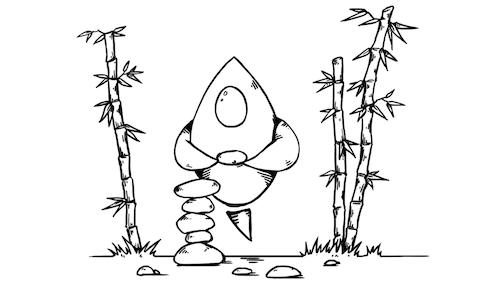
Humanity continues to move forward, and technology is the driving force that moves us to new horizons. As MartianCraft celebrates its 22nd year in business, alongside the 50 years of Apple, we look back to see what humanity’s past can teach us about our future.
Somewhere in the tall grass of an East African Rift Valley, a couple million years ago, a hand closed around a stone and struck it against another. The flake that broke away had an edge — and that edge changed humanity forever. Not because the tool itself was remarkable, but because of what it represented: a mind that could look at the world and imagine it as it could be, not only what it was.
Every meaningful leap in human history has followed a similar arc: Someone looked at a limitation and refused to accept it.
The 20th century showed that humans, when they put their minds to it, could compress a millennium into a single hundred-year sprint that could drive humanity forward more than they could ever imagine.
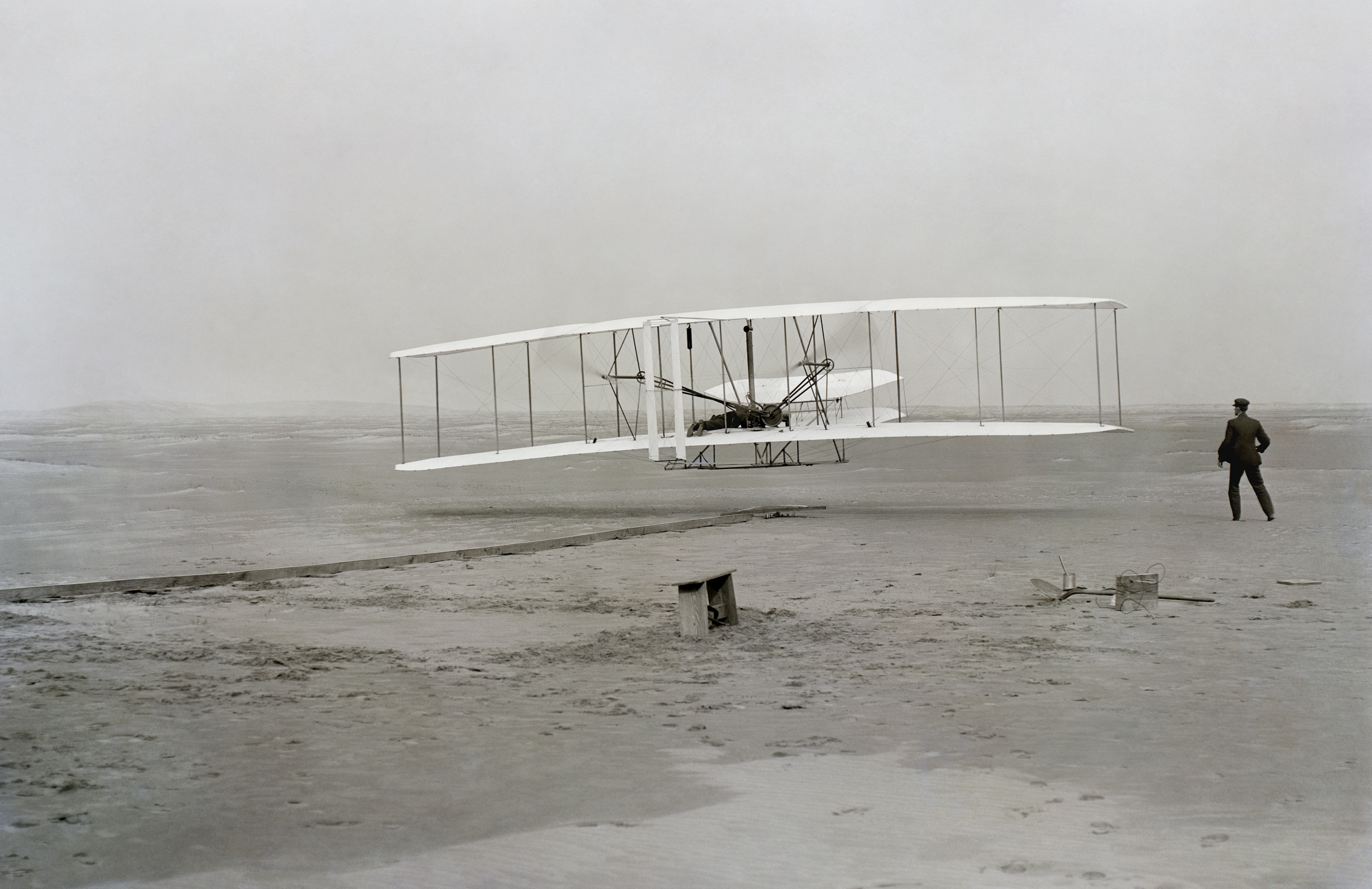
The Wright Brothers’ First Flight. Image via Library of Congress.
The Wright brothers’ 12-second flight at Kill Devil Hills (near Kitty Hawk, North Carolina) in 1903 gave way, within a single lifespan, to humans tracking footprints across the surface of the Moon.
Marconi’s crackling transatlantic radio signal in 1901 became the backbone of a global communications network powered by microwaves, twisted copper wires, fiber optics, and satellites.
Alexander Fleming’s accidental discovery of penicillin in 1928 launched a pharmaceutical revolution that roughly increased the human lifespan by 32 years or more.
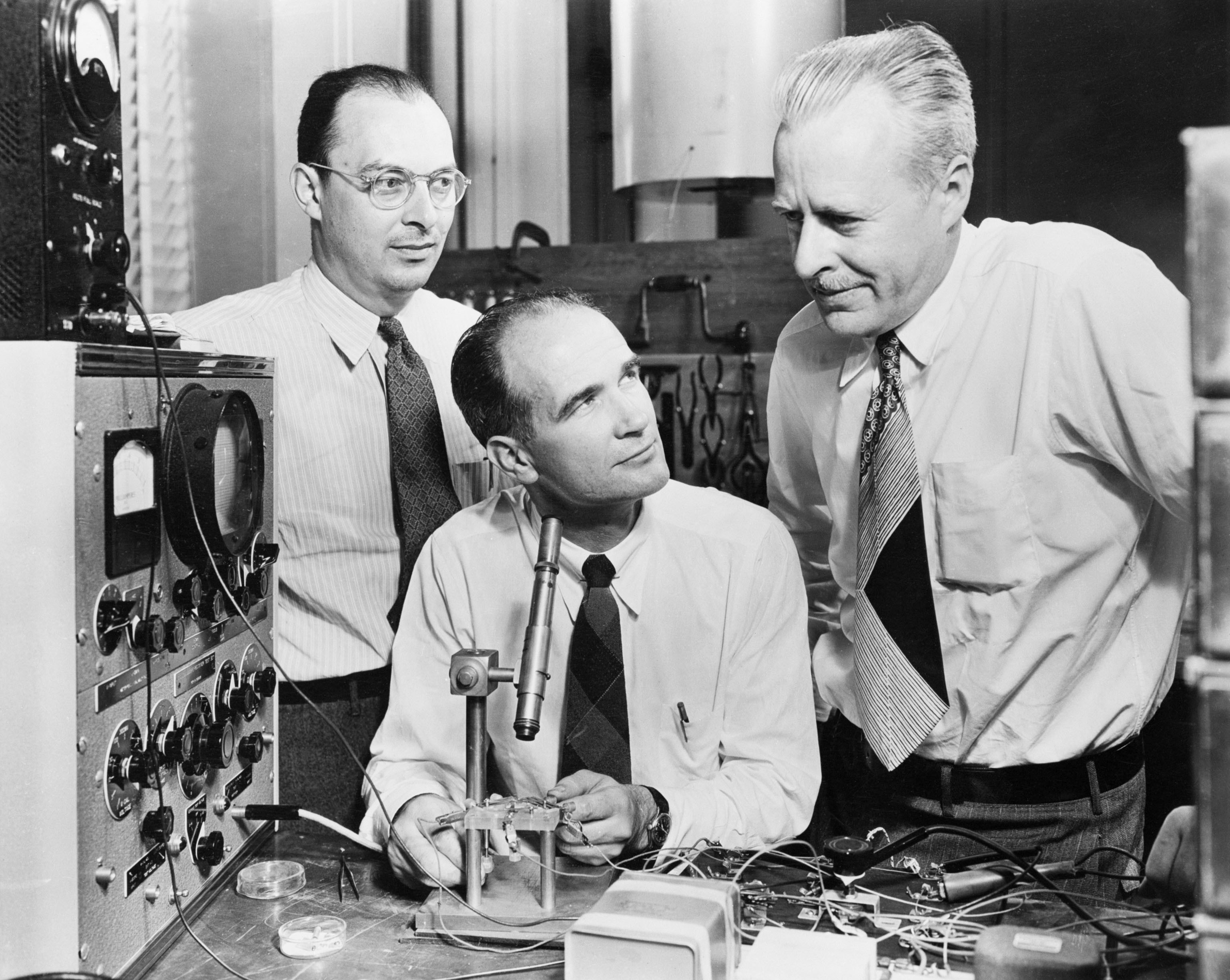
John Bardeen, William Shockley, and Walter Brattain, the inventors of the transistor. Image via AT&T / Bell Labs. Public Domain.
The invention of the transistor at Bell Labs in 1947 (in large part due to efforts coming out of World War II; see “Chip War” by Chris Miller <hhttps://www.simonandschuster.com/books/Chip-War/Chris-Miller/9781982172015>) was a tiny, quiet thing that set off a chain reaction that would reshape every industry, every government, every household on the planet.
Each of these breakthroughs shared a common element: They didn’t just solve a problem; they expanded the definition of what was possible. And each one demanded a new kind of craftsperson — someone who could wield the new tool not just competently, but with intention and care.
The Dawn of the Personal Computing Revolution
By the mid-1970s, computing had already proven itself indispensable — but only to institutions. Mainframes filled climate-controlled rooms. Terminals were tethered to universities and corporations. The power of computation was real, but it was locked away behind access badges and operator consoles and out of reach to all but a few researchers.
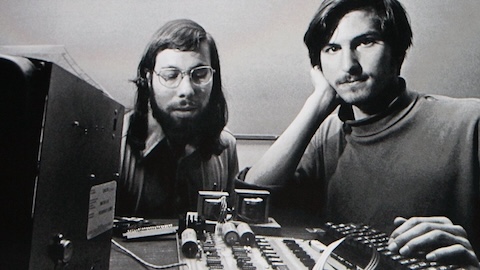
The two “Steves,” Wozniak and Jobs, with their Apple I computer in 1976 at the Homebrew Computer Club. Image author unknown.
Then, on April 1, 1976, in a garage in Los Altos, California, Steve Jobs, Steve Wozniak, and Ronald Wayne signed a partnership agreement and founded Apple Computer Company. It was April Fool’s Day — a fitting birthday for a company whose founding premise sounded to most of the computing establishment like a joke. They thought ordinary people should be able to own computers, and they set out to make that a reality.
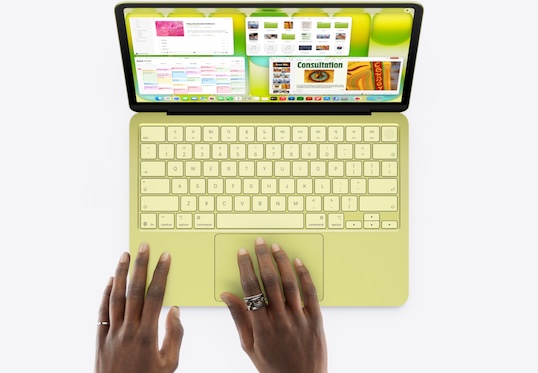
MacBook Neo, Apple’s latest computer in 2026. Image via Apple, Inc.
Half a century later, the device in your pocket carries more processing power than every machine NASA used to reach the Moon, combined. Apple’s platforms (iOS, macOS, watchOS, tvOS, visionOS) form the foundation of an ecosystem that touches billions of lives daily. The App Store alone has fundamentally reshaped how software reaches people, how businesses operate, and how developers build their livelihoods. What started as a contrarian bet in a California garage became the single most influential platform company in history.
Today, Apple turns the big 5-0. Fifty years in the making, and they’re still doing what they do best: bringing technology to the masses in a stylish way.
Software as a Craft
Somewhere along the way, the world started treating software like a commodity — something to be produced as cheaply as possible, as quickly as possible, by whoever would do it for the lowest rate. Offshore it. Template it. Ship it fast and fix it later. The prevailing wisdom became about velocity and volume, not vision and craftsmanship.
But software was never a commodity. Not really.
Software is the medium through which modern businesses think, communicate, and serve their customers. A poorly built application isn’t just a technical failure: It’s a broken promise to every user who opens it. A clunky interface, a data leak, a crash at the worst possible moment. These aren’t abstract engineering shortcomings. They’re experiences. They shape how people feel about your brand, your product, your judgment.
The best software has always been built the way the best things in any discipline are built: by people who understand the material deeply, who care about the details others overlook, and who take genuine pride in the finished product. Software development, when done right, is a craft. And like all crafts, it rewards experience, demands discipline, and cannot be faked.
Twenty-Two Years of Crafting

On April 1, 2004, MartianCraft opened its doors — sharing a birthday with the company whose platforms would define our work. The timing was poetic, even if it was intentional. When we started, Apple had yet to enter its most influential years. The Mac was just starting a resurgence, thanks to a massive rewrite to the Mac operating system with Mac OS X. The iPhone was still three years away, the App Store was four years away, and the entire landscape of mobile-first, platform-native software development was way over the horizon.
We were here before the App Store existed. We were building for Apple platforms when “there’s an app for that” hadn’t yet been coined. And for 22 years — from the first iPhone SDK to SwiftUI, from iCloud to on-device machine learning — MartianCraft has been doing the same thing: building exceptional software for clients who understand that quality matters.
That longevity isn’t an accident. It’s the result of a deliberate philosophy. We have never chased the lowest bid, and we have never offshored our engineering. Every line of code that ships is from MartianCraft, written by seasoned developers based in the United States — people who are not just proficient in Apple’s platforms but who are genuine experts, many of whom have been building for these systems since before the iPhone existed.
Our clients are discerning because their products demand it. When the quality of your software is the quality of your customer’s experience, there’s no room for “good enough.” There’s only great.
The AI Inflection Point
All of this brings us to the current inflection point and the answer to a question that dominates every conversation in our industry right now.
Artificial intelligence, and specifically large language models, has arrived with a force that few technologies in the short history of computers can match. Tools like Claude, ChatGPT, GitHub Copilot, and more can generate code, draft documentation, and scaffold entire applications in seconds. The productivity gains are real, the implications are staggering, and, for many in the software industry, the anxiety is palpable.
Will AI replace developers? Is the craft of software engineering on borrowed time?
Here’s what 22 years of software development has taught us: Every major technological shift produces the same fear and the same opportunity.
When the App Store launched, web developers were worried they’d be obsolete. When Swift replaced Objective-C as Apple’s language of choice, a generation of developers feared they’d be left behind. When cloud computing matured, entire categories of infrastructure engineers were told their days were numbered by the onset of “no code applications.”
In every case, the technology didn’t eliminate the need for skilled practitioners. Instead, it raised the bar.
It demanded more judgment, not less. More taste, not less. More understanding of the why behind the code, because the what got easier to produce.
AI is the most powerful amplifier the software industry has ever seen. But an amplifier is only as good as the signal it’s amplifying. Feed it mediocrity, and you get mediocre output at scale. Feed it the expertise of engineers who understand platform conventions — who think in terms of user experience rather than function signatures and who know the difference between code that works and code that’s right — and you get something extraordinary.
This is the future we’re building toward at MartianCraft. Not a future where AI replaces craft, but one where craft is more important than ever. When anyone can generate code, the differentiator becomes the judgment, taste, and expertise that determines which code to generate, how to architect, and why the details matter.
We believe that the crafter behind the tools is important. That skills and experience are what generate the best results. That’s why we use AI as a tool, but never to “vibe code” anything. Our software is hand built, detail oriented, and put through exacting standards that we hold high.
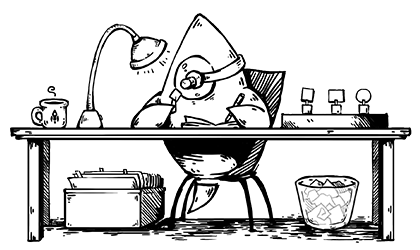
That’s why even the details on our website are thought out and always have a human touch. Articles like this on our site are written by people who are crafting their stories for other humans, edited by humans (hi, Liz!), and have hand-drawn artwork as the chef’s kiss.
The Next Chapter
Fifty years ago, Apple bet that personal computing would change the world. Twenty-two years ago, MartianCraft bet that quality would always matter and that there would always be clients who refused to settle, who understood that their software was too important to hand off to the lowest bidder or leave to an algorithm to decide what’s best.
Both bets paid off. Both continue to.
As we look ahead, the landscape is shifting faster than ever. On-device AI, spatial computing, and platform convergence are creating opportunities that would have sounded like science fiction a decade ago.
The tools are more powerful. The stakes are higher. The margin between great software and everything else continues to widen.
MartianCraft was built for exactly this kind of moment — a moment that rewards deep expertise, principled craftsmanship, and the kind of long-term partnership that doesn’t come from a vendor catalog or an offshored sprint team.
It comes from skilled craftspeople who love what they do and strive for the best products of their work. That’s why we hire people who love the challenge, who push the needle forward. We don’t take the easy way out; we embrace things that are built with sweat and integrity.
We’ve spent 22 years earning the trust of clients who expect the best.
… and we’re just getting started.